
Is Salary Sacrifice Worth It? Savings, Catches and Who Gains Most
Salary sacrifice is one of the few legal ways to pay less income tax and National Insurance on the same package. For most people it is worth it, but it lowers your official salary, and that has side effects worth knowing before you sign.
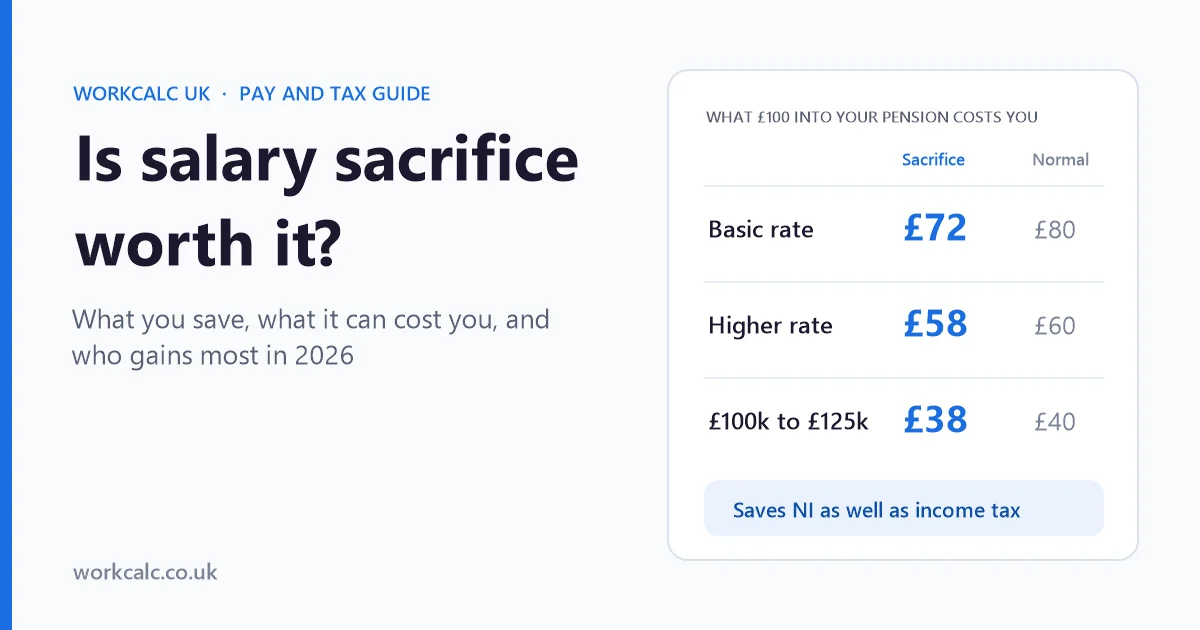
For most employees, yes. Salary sacrifice takes money from your pay before income tax and National Insurance, so £100 into your pension costs £72 at basic rate, £58 at higher rate and just £38 between £100,000 and £125,140. The catch is that your contractual salary goes down, which can affect mortgage applications, maternity pay and salary-linked benefits. From April 2029, the National Insurance saving on pensions is capped at £2,000 a year.
Key points
- Salary sacrifice saves income tax and employee National Insurance; a normal pension contribution saves only the tax.
- The biggest winners earn £100,000 to £125,140, are near the £60,000 Child Benefit line, or have an employer that passes on its 15% NI saving.
- The catches: mortgages, maternity pay, life cover, the minimum wage floor and early exit fees on car schemes.
- From April 2029, only the first £2,000 a year of pension sacrifice is free of National Insurance.
How salary sacrifice saves money
You agree to give up part of your salary, and your employer provides a benefit of the same value instead, most often an extra pension contribution, an electric car or a bike. Because your salary is lower, you pay less income tax and less National Insurance. Your employer pays less National Insurance too, at 15%.
Compare that with a normal pension contribution. Through a net pay or relief at source scheme you get income tax relief, but National Insurance is still charged on your full pay. That National Insurance saving, 8p in every £1 up to £50,270 and 2p above, is the whole advantage of salary sacrifice.
£30,000 salary, £1,500 a year into your pension
What £100 into your pension really costs
The saving depends on your marginal rate, the tax and National Insurance on your next pound of pay.
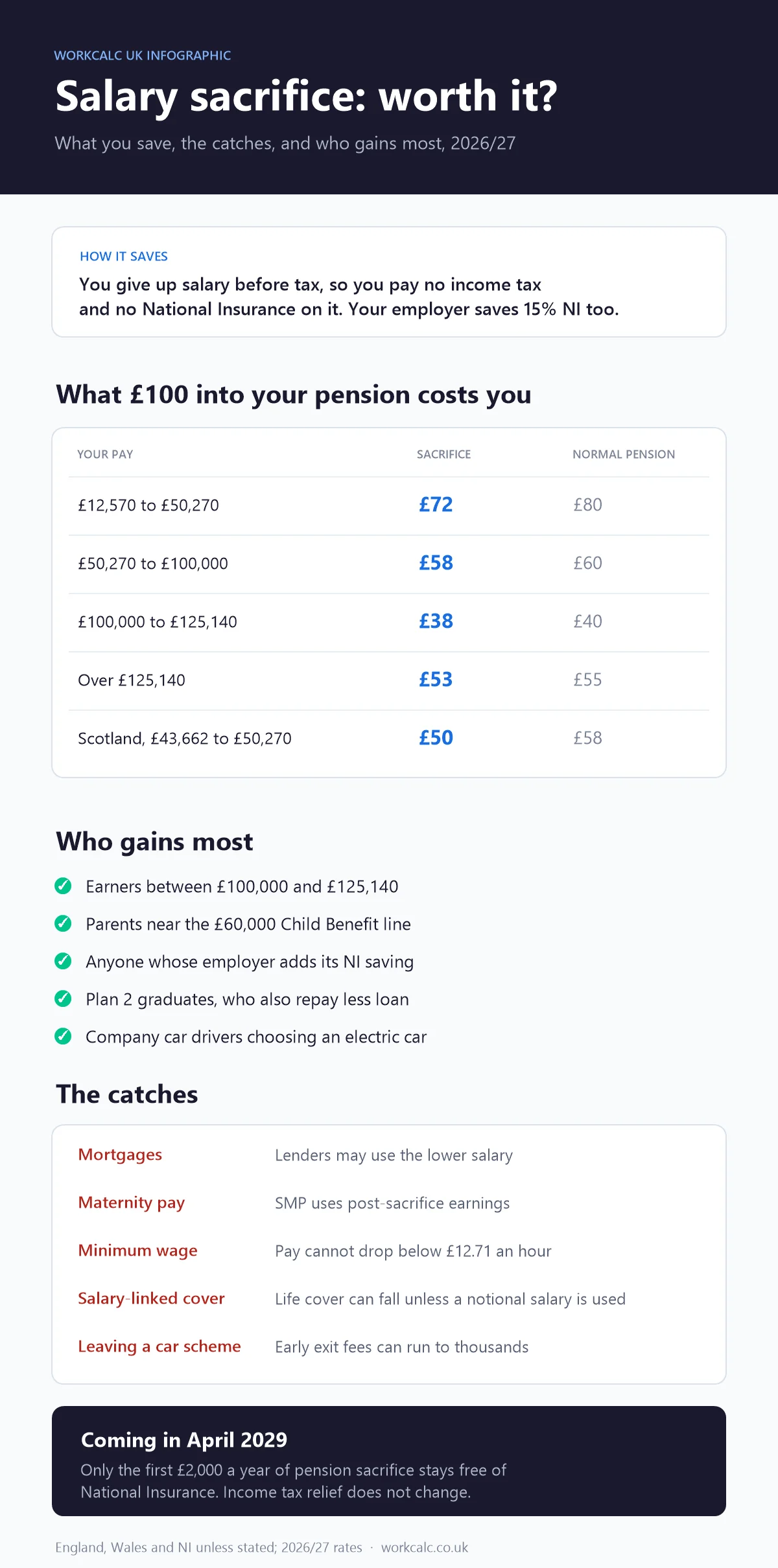
| Your pay, 2026/27 | Salary sacrifice | Normal contribution |
|---|---|---|
| £12,570 to £50,270 | £72 | £80 |
| £50,270 to £100,000 | £58 | £60 |
| £100,000 to £125,140 | £38 | £40 |
| Over £125,140 | £53 | £55 |
| Scotland, £43,662 to £50,270 | £50 | £58 |
The Scottish line stands out. Between £43,662 and £50,270 a Scottish taxpayer pays 42% income tax and 8% National Insurance, so salary sacrifice halves the cost of pension saving. Check your own figures with the Pension Contribution Calculator, which compares all three scheme types.
Who gains most
Earners between £100,000 and £125,140
In this band you lose £1 of Personal Allowance for every £2 earned, so the marginal rate is 62%. Sacrificing £10,000 on a £110,000 salary brings you back to £100,000, restores the full allowance and costs just £3,800 of take-home pay. It can also keep you eligible for Tax-Free Childcare and the extra funded childcare hours, which stop above £100,000.
Related tool Salary Sacrifice Calculator: your exact saving, including the £100,000 sweet spot →Parents near £60,000
If you or your partner claim Child Benefit, the High Income Child Benefit Charge claws back 1% for every £200 of adjusted net income above £60,000. Salary sacrifice lowers adjusted net income, so on £62,000 a £2,000 sacrifice removes a 10% charge.
People whose employer shares its saving
Your employer saves 15% National Insurance on everything you sacrifice. Some pay part or all of it into your pension, which turns £5,000 of sacrifice into £5,750 in your pot. It costs them nothing, so it is always worth asking.
Plan 2 graduates
Student loan repayments are based on pay after sacrifice. Above £29,385, a Plan 2 graduate repays 9p less for every £1 sacrificed, which cuts the cost of £100 in their pension to about £63 at basic rate. Bear in mind that lower repayments now may just mean more is written off later.
The catches
Salary sacrifice lowers your contractual salary. That figure is used for more than tax.
- Mortgages: many lenders assess affordability on your post-sacrifice salary. HMRC guidance allows employers to confirm a pre-sacrifice "notional" salary to lenders, and some accept it. If you are buying within a year, speak to a broker first.
- Maternity, paternity and sick pay: statutory payments are based on average earnings in a reference period. Statutory Maternity Pay is 90% of those earnings for the first six weeks, so a sacrifice during that period reduces it.
- Salary-linked benefits: life cover, pension contributions set as a percentage of salary, pay rises and redundancy pay may be based on the lower figure unless your employer uses a notional salary.
- The minimum wage floor: your pay after sacrifice must still meet the minimum wage, £12.71 an hour from age 21, which limits how much lower earners can sacrifice.
- Less flexibility: most schemes only let you change a sacrifice at an annual review or after a life event.
Salary sacrifice cars
Electric cars are the other big use. You still pay Benefit-in-Kind tax on the car, but the rate for a fully electric car is only 4% in 2026/27. On a £40,000 car that is £640 a year for a higher rate taxpayer, or £53 a month.
£600 a month gross sacrifice, higher rate taxpayer
That is about a third less than paying £600 a month from take-home pay. The biggest risk is leaving your job: the car usually goes back and early termination fees can run to thousands. The Benefit-in-Kind rate also rises each year, to 9% by 2029/30. Model it with the Salary Sacrifice Car Calculator.
The 2029 cap on pension salary sacrifice
The November 2025 Budget announced that from April 2029, only the first £2,000 a year of pension contributions made through salary sacrifice will be free of employee and employer National Insurance. Income tax relief is not affected. Anyone sacrificing less than £2,000 a year, which covers most people paying the auto-enrolment minimum, keeps the full saving. Higher earners sacrificing more will lose some of the National Insurance advantage, but will still get full income tax relief.
The verdict: is salary sacrifice worth it for you?
Worth it if
- You pay basic or higher rate tax
- You earn between £100,000 and £125,140
- You are near the £60,000 Child Benefit line
- Your employer adds its NI saving
- You plan to stay in your job for a car lease
Think twice if
- You are applying for a mortgage soon
- You expect maternity leave within a year
- Your pay is close to the minimum wage
- Life cover depends on your salary
- You might leave during a car lease
If the "think twice" list applies, you do not have to rule salary sacrifice out: ask your employer whether it uses a notional salary for mortgages and benefits, and time any increase to avoid a maternity reference period or mortgage application.
Sources
- HMRC, Salary sacrifice for employers, and Employment Income Manual guidance on salary sacrifice
- HM Treasury, Budget November 2025: salary sacrifice pension contributions
- GOV.UK, Statutory Maternity Pay and National Minimum Wage rates
- HMRC, company car Benefit-in-Kind appropriate percentages to 2029/30
Frequently asked questions
Salary sacrifice savings, catches and rules.
Is salary sacrifice worth it?
For most employees, yes. Because you give up salary before income tax and National Insurance, £100 into your pension costs £72 at basic rate and £58 at higher rate in 2026/27, against £80 and £60 through a normal contribution. It is worth checking the knock-on effects on mortgages, maternity pay and salary-linked benefits first.
Does salary sacrifice affect my mortgage?
It can. Many lenders assess affordability on your salary after sacrifice. HMRC guidance allows employers to quote a notional, pre-sacrifice salary to lenders, and some lenders accept it, but if you are applying in the next year it is worth speaking to a broker before increasing a sacrifice.
Does salary sacrifice affect maternity pay?
Yes. Statutory Maternity Pay is 90% of your average weekly earnings for the first six weeks, based on earnings in a reference period before the baby is due. A sacrifice running through that period lowers those earnings and so lowers the payment.
Is salary sacrifice better than a normal pension contribution?
Usually. A normal contribution gets income tax relief; salary sacrifice also saves employee National Insurance: 8p in every £1 below £50,270 and 2p above. If your employer passes on its own 15% National Insurance saving, even more goes into your pension.
What is the salary sacrifice cap from 2029?
From April 2029, only the first £2,000 a year of pension contributions made through salary sacrifice will be free of National Insurance. Income tax relief is unchanged, and contributions under £2,000 a year keep the full saving.
Is a salary sacrifice electric car worth it?
It often is, because the Benefit-in-Kind rate on an electric car is only 4% in 2026/27. A £600 a month gross sacrifice costs a higher rate taxpayer about £401 a month after tax, National Insurance and £53 of Benefit-in-Kind tax on a £40,000 car. The main risk is an early exit fee if you leave your job.
Does salary sacrifice reduce student loan repayments?
Yes. Student loan repayments are based on pay after sacrifice, so a Plan 2 graduate earning over £29,385 repays 9p less for every £1 sacrificed. That makes £100 into a pension cost about £63 at basic rate, although lower repayments now can mean more is written off later rather than repaid.
Can I stop salary sacrifice at any time?
Not usually. Most schemes only let you change or stop a sacrifice at an annual review or after a life event such as marriage, a new baby or a change in circumstances. Car schemes normally run for a fixed lease term, with a fee if you leave early.