
UK Income Tax Bands 2026/27: Rates, Thresholds and the 40% Bracket
Every income tax band for the 2026/27 tax year in England, Wales, Northern Ireland and Scotland, how the bands actually work, where the 40% bracket and the 60% trap start, and how much tax you pay on common salaries.
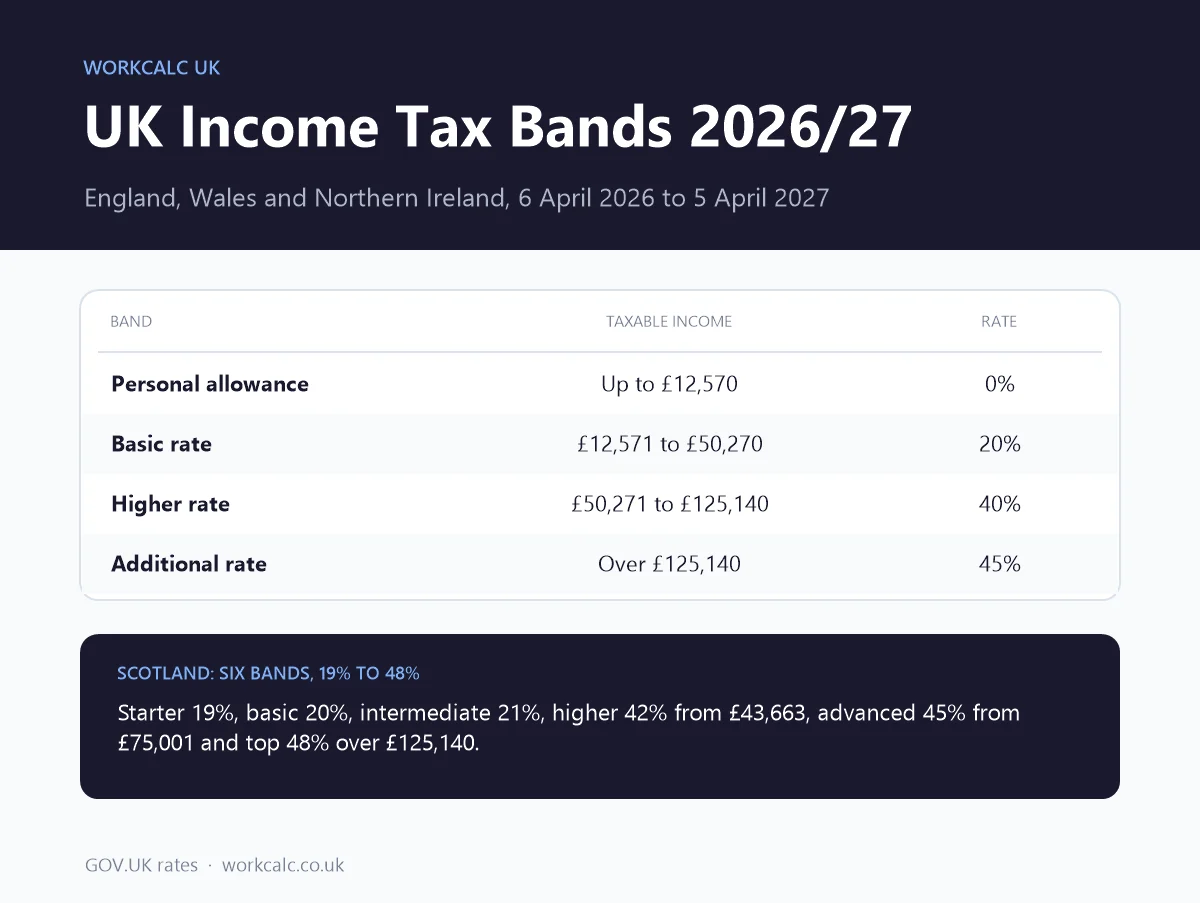
For 2026/27 (6 April 2026 to 5 April 2027) in England, Wales and Northern Ireland you pay 0% on the first £12,570, 20% on £12,571 to £50,270, 40% on £50,271 to £125,140 and 45% above £125,140. Each rate applies only to the income inside its band. Scotland has six bands, from 19% to 48%, with the 42% higher rate starting at £43,663.
Key points
- The personal allowance is £12,570, the same as in 2025/26.
- You only pay 40% on the part of your income above £50,270, not on all of it.
- Between £100,000 and £125,140 the effective rate is 60%, because your personal allowance is withdrawn.
- Scotland's starter and basic bands are wider in 2026/27, but its higher rate still starts at £43,663.
- Savings and dividends use UK bands and their own rates, even in Scotland.
Income tax bands 2026/27: England, Wales and Northern Ireland
| Band | Taxable income | Rate |
|---|---|---|
| Personal allowance | Up to £12,570 | 0% |
| Basic rate | £12,571 to £50,270 | 20% |
| Higher rate | £50,271 to £125,140 | 40% |
| Additional rate | Over £125,140 | 45% |
These are the same thresholds as in 2025/26. Wales has the power to set its own rates, but Welsh taxpayers, who have a tax code starting with C, currently pay the same rates as England and Northern Ireland. The personal allowance shrinks for income over £100,000, so the bands above assume the standard £12,570 allowance.
Scottish income tax bands 2026/27
Scotland sets its own rates and bands on earnings, pensions and most other non-savings income:
| Band | Taxable income | Rate |
|---|---|---|
| Personal allowance | Up to £12,570 | 0% |
| Starter rate | £12,571 to £16,537 | 19% |
| Basic rate | £16,538 to £29,526 | 20% |
| Intermediate rate | £29,527 to £43,662 | 21% |
| Higher rate | £43,663 to £75,000 | 42% |
| Advanced rate | £75,001 to £125,140 | 45% |
| Top rate | Over £125,140 | 48% |
The starter and basic bands are wider than in 2025/26, when the starter rate ended at £15,397 and the basic rate at £27,491, so lower earners pay a little less. The higher, advanced and top thresholds have not moved. Here is how Scottish income tax compares with the rest of the UK:
| Salary | Rest of UK | Scotland | Difference |
|---|---|---|---|
| £25,000 | £2,486 | £2,446 | −£40 |
| £35,000 | £4,486 | £4,501 | +£15 |
| £45,000 | £6,486 | £6,882 | +£396 |
| £60,000 | £11,432 | £13,182 | +£1,750 |
| £80,000 | £19,432 | £21,732 | +£2,300 |
Scottish taxpayers pay slightly less up to a salary of about £33,500, saving at most £39.67 a year, and more above it, with the gap widening sharply once the 42% rate starts at £43,663. You pay Scottish income tax if your main home is in Scotland, wherever you work.
How tax bands work
UK income tax is banded, so each rate applies only to the slice of income that falls in its band. Moving into a higher band never makes you worse off overall, because only the extra income is taxed at the higher rate. On a £60,000 salary in England:
- The first £12,570 is tax-free.
- The next £37,700, up to £50,270, is taxed at 20%: £7,540.
- The last £9,730 is taxed at 40%: £3,892.
That is £11,432 in total, an average rate of 19.1% even though the top rate is 40%. The figure that matters for a pay rise or bonus is your marginal rate, the tax on your next pound, while your effective rate is the share of all your income that goes in tax.
Income tax on common salaries, 2026/27
| Salary | Income tax | Effective rate | Marginal rate |
|---|---|---|---|
| £20,000 | £1,486 | 7.4% | 20% |
| £30,000 | £3,486 | 11.6% | 20% |
| £40,000 | £5,486 | 13.7% | 20% |
| £50,000 | £7,486 | 15.0% | 20% |
| £60,000 | £11,432 | 19.1% | 40% |
| £80,000 | £19,432 | 24.3% | 40% |
| £100,000 | £27,432 | 27.4% | 60% |
| £110,000 | £33,432 | 30.4% | 60% |
| £125,140 | £42,516 | 34.0% | 45% |
| £150,000 | £53,703 | 35.8% | 45% |
Figures are for England, Wales and Northern Ireland with a 1257L tax code. The marginal rate jumps to 60% between £100,000 and £125,140, then drops back to 45%. For take-home pay after National Insurance, pension and student loan, use the salary calculator, or see our guide to gross vs net pay.
The 40% tax bracket and the £100,000 trap
- The 40% bracket: you become a higher rate taxpayer once your taxable income goes over £50,270. Pension contributions and salary sacrifice reduce taxable income, so they can keep some or all of your income in the 20% band. The Salary Sacrifice Calculator shows how much that saves.
- Child Benefit: above £60,000 of adjusted net income, the High Income Child Benefit Charge takes back 1% of your Child Benefit for every £200, until it is all repaid at £80,000.
- The 60% trap: between £100,000 and £125,140 you lose £1 of personal allowance for every £2 you earn, which adds 20% to the 40% rate. You also lose tax-free childcare and the extra funded childcare hours above £100,000. See £110,000 after tax for a worked example.
- Additional rate: above £125,140 the rate is 45%, or 48% in Scotland, and you have no personal allowance.
National Insurance, savings and dividends
- National Insurance: employees pay 8% on earnings between £12,570 and £50,270 and 2% above that. With income tax, that makes a marginal rate of 28% in the basic band, 42% in the higher band and 62% in the £100,000 trap.
- Savings interest: taxed at 20%, 40% or 45% after your allowances, rising to 22%, 42% and 47% from 6 April 2027. Basic rate taxpayers can earn £1,000 of interest tax-free and higher rate taxpayers £500. See the personal savings allowance.
- Dividends: the first £500 is tax-free, then dividends are taxed at 10.75% in the basic band, 35.75% in the higher band and 39.35% in the additional band.
- Scotland: savings and dividends use the UK bands and rates above, not the Scottish ones.
Your tax code tells your employer how much tax-free pay to give you. If yours looks wrong, see wrong tax code? How to check and fix it, or decode it with the Tax Code Calculator.
Sources
- GOV.UK, Income Tax rates and Personal Allowances
- GOV.UK, Rates and thresholds for employers 2026 to 2027
- gov.scot, Scottish Income Tax rates and bands 2025 to 2026 and 2026 to 2027
- GOV.UK, Tax on dividends; Tax on savings interest
Frequently asked questions
UK income tax bands, quickly answered.
What are the UK income tax bands for 2026/27?
In England, Wales and Northern Ireland: no tax on the first £12,570 (the personal allowance), 20% basic rate on £12,571 to £50,270, 40% higher rate on £50,271 to £125,140, and 45% additional rate above £125,140. Scotland has six bands from 19% to 48%.
At what salary do you pay 40% tax?
You start paying 40% on the part of your income above £50,270 in England, Wales and Northern Ireland. Only the income above that line is taxed at 40%; everything below it is still taxed at 0% or 20%. In Scotland the 42% higher rate starts at £43,663.
Do you pay 40% tax on all your income?
No. UK income tax is banded, so each rate applies only to the slice of income in that band. On a £60,000 salary you pay nothing on the first £12,570, 20% on the next £37,700 and 40% on the last £9,730: £11,432 in total, an average of 19.1%.
What is the tax-free personal allowance for 2026/27?
£12,570, the same as the year before. It is reduced by £1 for every £2 of income over £100,000, so it disappears completely at £125,140. If you get Marriage Allowance from your partner, yours rises to £13,830.
What is the 60% tax trap?
Between £100,000 and £125,140, every extra £2 you earn removes £1 of your personal allowance. That makes the effective income tax rate on income in this range 60%, or 62% with National Insurance. Paying more into a pension can bring your income back below £100,000 and restore the allowance.
Are Scottish tax bands different?
Yes. Scotland sets its own income tax rates and bands on earnings: 19% starter, 20% basic, 21% intermediate, 42% higher, 45% advanced and 48% top rate. Scottish taxpayers have a tax code starting with S. Savings and dividend income are still taxed at UK rates.
When does the 2026/27 tax year start and end?
It runs from 6 April 2026 to 5 April 2027. The 2027/28 tax year starts on 6 April 2027.
Does National Insurance follow the same bands?
Nearly. Employees pay 8% National Insurance on earnings between £12,570 and £50,270 a year and 2% above that, so the thresholds match the income tax bands in England, Wales and Northern Ireland, but there is no extra rate at £125,140. Combined with income tax, the marginal rate is 28% in the basic band and 42% in the higher band.