
£30,000 After Tax
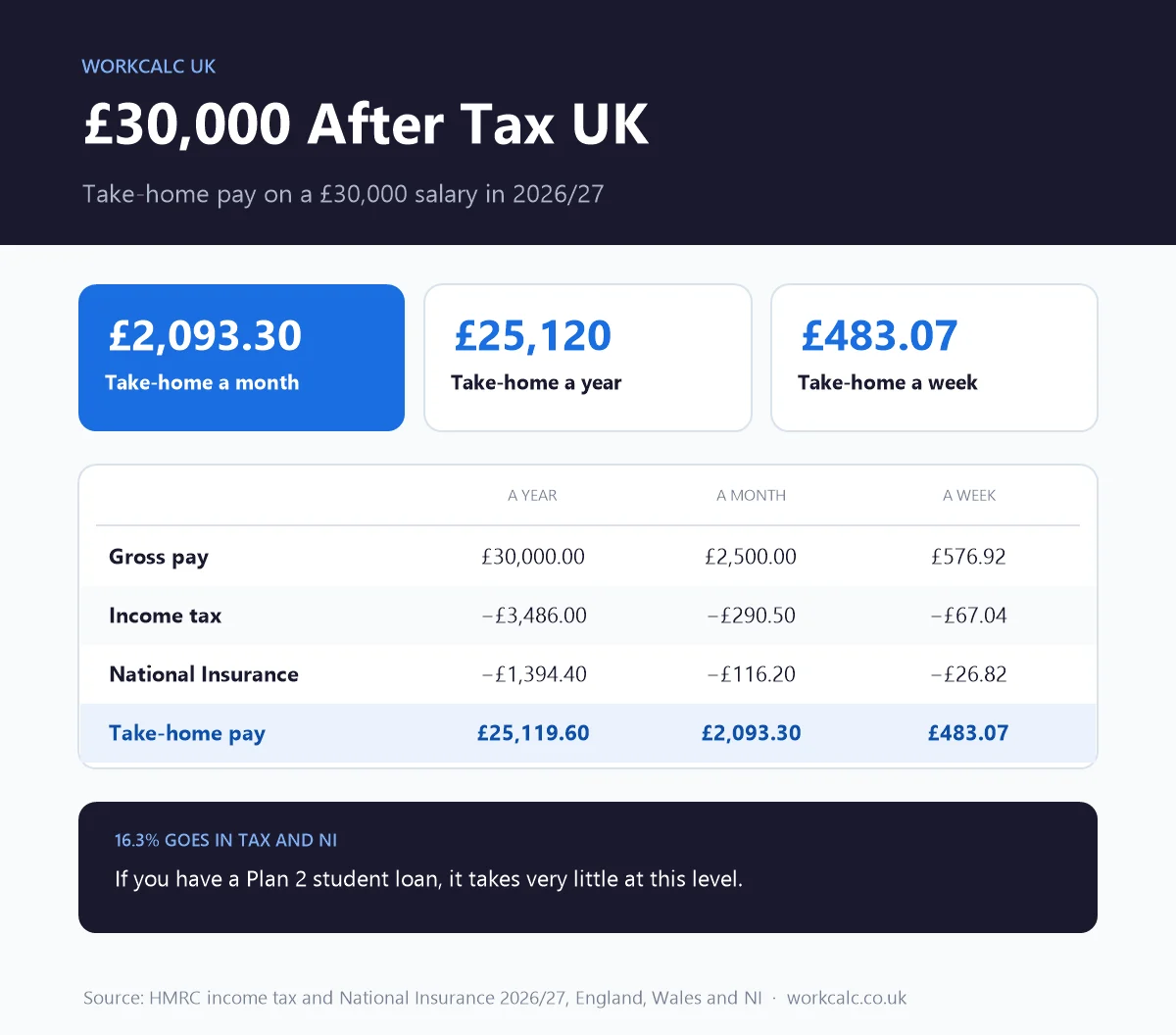
A £30,000 salary leaves £25,120 a year after income tax and National Insurance, which is £2,093 a month or £483 a week in 2026/27. If you have a Plan 2 student loan, it takes very little at this level.
Adjust for your situation
£30,000 after tax: the short answer
A salary of £30,000 leaves £25,119.60 after income tax and National Insurance in 2026/27. Paid monthly that is £2,093.30, and 16.3% of the salary goes on the two deductions.
| Year | Month | Week | |
|---|---|---|---|
| Gross pay | £30,000.00 | £2,500.00 | £576.92 |
| Income tax | −£3,486.00 | −£290.50 | −£67.04 |
| National Insurance | −£1,394.40 | −£116.20 | −£26.82 |
| Take-home pay | £25,119.60 | £2,093.30 | £483.07 |
How the tax on £30,000 is worked out
- Personal allowance: the first £12,570 is tax-free
- Basic rate: 20% on £17,430 = £3,486.00
- National Insurance: 8% on £17,430 = £1,394.40
Your effective rate is 16.3%, but the rate on the next pound you earn is 28%. That second figure is the one to use when you weigh up overtime, a bonus or a pay rise.
£30,000 and your student loan
£30,000 is where student loan plans start to part company. Plan 2, the loan most people who started university in England or Wales between 2012 and 2023 hold, only repays on income above £29,385. On £30,000 that is just £55.35 a year, or about £4.61 a month.
Older and newer plans take far more from the same pay. Plan 1 repays above £26,900 and costs £279.00 a year, while Plan 5, for courses starting from August 2023, repays above £25,000 and costs £450.00. Plan 4 in Scotland starts above £33,795, so it takes nothing yet.
How £30,000 compares with typical pay
The ONS found that median pay for full-time employees was £39,039 in April 2025, so £30,000 is £9,039 (23.2%) below the middle of the full-time pay range. It is still 21% more than a full-time National Living Wage salary of £24,785 on a 37.5-hour week.
The move up from £25,000 is worth £3,600 a year in take-home pay, or £300 a month, because every pound of that £5,000 is taxed at the same 28% combined rate.
£30,000 after tax with a student loan
| Plan | Repays above | A year | Take-home |
|---|---|---|---|
| Plan 1 | £26,900 | £279.00 | £24,841 |
| Plan 2 | £29,385 | £55.35 | £25,064 |
| Plan 4 (Scotland) | £33,795 | £0.00 | £25,120 |
| Plan 5 | £25,000 | £450.00 | £24,670 |
| Postgraduate Loan | £21,000 | £540.00 | £24,580 |
Plan 4 (Scotland) does not take anything at this salary. The others take 9% of income above their threshold, or 6% for a Postgraduate Loan.
Pension contributions on £30,000
A 5% contribution puts £1,500 a year into your pension. Through a net pay scheme it reduces take-home pay by £1,200, because the contribution comes off before income tax. Through salary sacrifice, which also saves National Insurance, the cost falls to £1,080. Your employer adds at least 3% on top under auto-enrolment. The Salary Sacrifice Calculator shows other percentages.
What a pay rise is worth on £30,000
| Rise | Gross | Extra take-home a year | A month | You keep |
|---|---|---|---|---|
| 3.3% (NHS and council award) | £990 | £713 | £59 | 72% |
| 5% | £1,500 | £1,080 | £90 | 72% |
| £1,000 | £1,000 | £720 | £60 | 72% |
| £5,000 | £5,000 | £3,600 | £300 | 72% |
For a rise that includes a pension, student loan or back pay, use the Pay Rise Calculator.
£30,000 after tax in Scotland
| England, Wales and NI | Scotland | |
|---|---|---|
| Income tax | £3,486.00 | £3,451.07 |
| National Insurance | £1,394.40 | £1,394.40 |
| Take-home a year | £25,119.60 | £25,154.53 |
| Take-home a month | £2,093 | £2,096 |
You pay Scottish income tax if your main home is in Scotland, and your tax code starts with S. On £30,000 a Scottish taxpayer keeps £34.93 more a year. National Insurance is the same across the UK.
How £30,000 compares
Median pay for full-time employees was £39,039 in April 2025, according to the ONS Annual Survey of Hours and Earnings, so £30,000 is £9,039 (23.2%) below that figure.
| Salary | Take-home a year | A month | Difference |
|---|---|---|---|
| £25,000 | £21,520 | £1,793 | −£3,600 a year |
| £30,000 | £25,120 | £2,093 | This page |
| £35,000 | £28,720 | £2,393 | +£3,600 a year |
What these figures assume
- A 1257L tax code and a single job paid through PAYE
- England, Wales or Northern Ireland unless the Scotland table says otherwise
- No pension, student loan or taxable benefits unless shown
- HMRC 2026/27 rates; the personal allowance and higher rate threshold are frozen until April 2031
For a different tax code, pension type or bonus, use the Take-Home Pay Calculator.
Questions about £30,000
How much student loan do I repay on £30,000?
On Plan 2 you repay £55.35 a year, because only the £615 above the £29,385 threshold is charged at 9%. Plan 1 costs £279.00 a year and Plan 5 costs £450.00, while Plan 4 takes nothing until £33,795.
Is £30,000 a good salary in the UK?
It is below typical full-time pay: the ONS median for full-time employees was £39,039 in April 2025. After tax £30,000 leaves £25,120 a year, or £2,093 a month. How comfortable that feels depends heavily on where you live and what you pay for housing.